
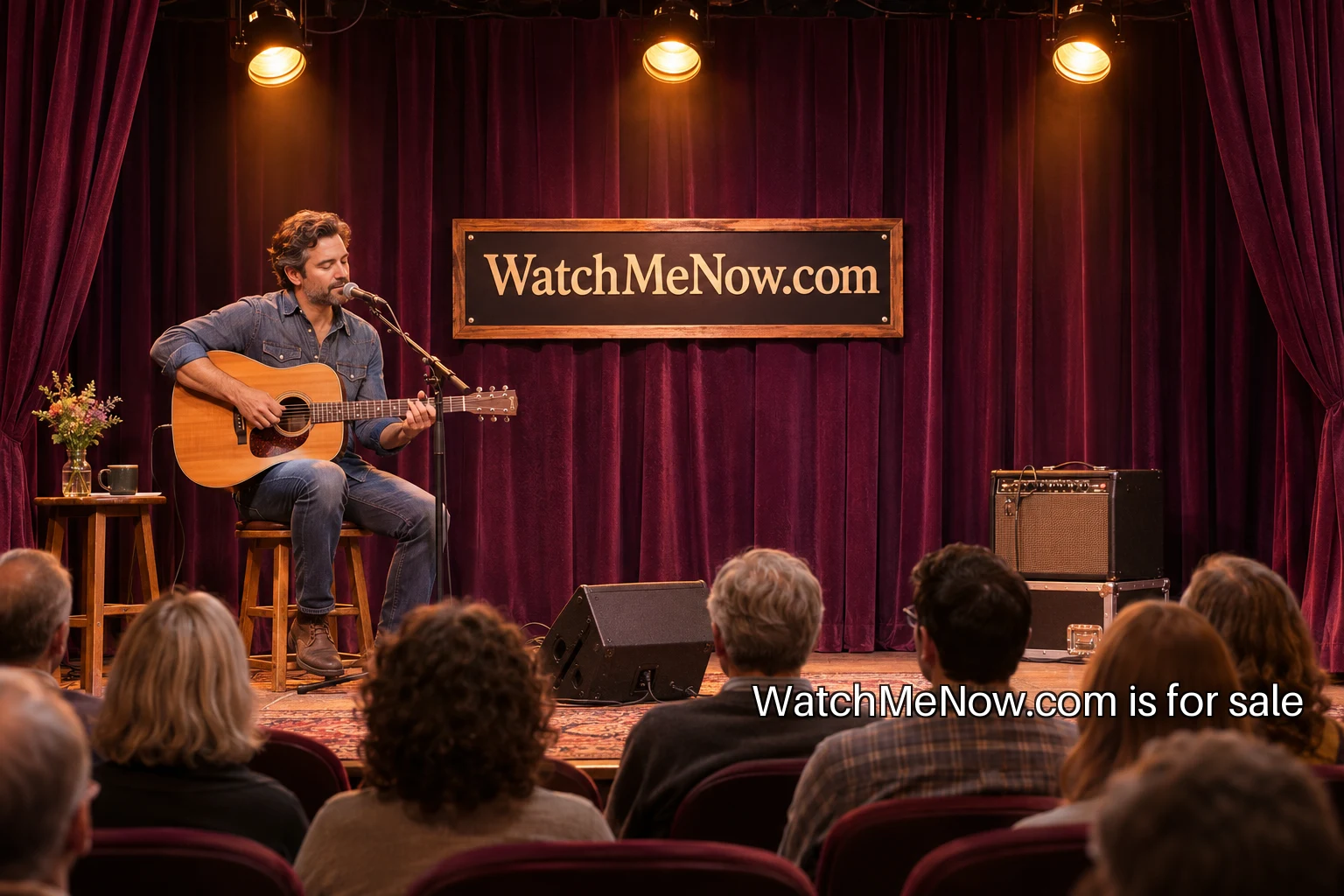
Give the first show a repeatable shape
An independent performance series can begin in a small room with a precise promise. Imagine a monthly set featuring two artists, a short conversation and a final collaboration. The point of the format is to make the evening legible to everyone making it: the performers know how long they have, the crew knows the transitions and the audience has a reason to reserve the next date.
WatchMeNow.com could hold the series identity across its announcements, show pages and replay archive. The producer could introduce a first intimate performance under the same name used for a later season. The work can grow through programming choices rather than a new address every time the lineup changes. That gives a small team a settled identity to put on its first ticket or invitation.
Choose the first room for the actual program
Start with the production's needs, rather than a dramatic photograph of a venue. Count the people performing at once, the microphones and inputs, the camera positions and the movement between acts. A spoken set has different requirements from a drum kit and a full band. Ask the venue what equipment is available and who is responsible for operating it. Write down assumptions that would otherwise surface during setup.
Access deserves the same early attention. Check arrival routes, seating options, toilets, viewing positions and the information guests will need before booking. Ask performers about their own requirements. For a streamed show, decide how remote viewers will receive captions or other access support. The W3C media accessibility planning guide is a useful starting point for that work. Treat these choices as part of the show, with named owners and dates.
Program for transitions as well as performances
A lineup is also a sequence of changeovers. If one act needs ten minutes to reset the stage, the producer needs something deliberate to happen during those ten minutes. That could be a prepared interview in a second area or a short interlude already cleared for broadcast. A host should know what the next act needs before asking the audience to wait.
Build a running order with realistic lengths. Include the welcome, introductions, applause, stage movement and closing information. Rehearse the opening and one difficult changeover. The rehearsal is a chance to find decisions that cannot be made gracefully while a performer is waiting at a microphone. Leave space for the show to breathe without losing the agreed end time.
Make the replay a planned edition
A live event and its replay do not have to be identical products. Decide before the show whether the recording will remain complete, become edited individual sets or be available only for a defined period. Tell the artists what is planned and agree on credit, promotion and permitted use. Check rights to songs, backing tracks and other material with the appropriate people before assuming the recording can be published.
The replay page can add information that was difficult to provide live: the performers' approved links, a clear list of segments and a text description of the evening. Keep the date visible so an archive is not mistaken for an upcoming booking. If a recording needs correction, preserve a clear route for the artist to contact the producer. A useful archive is maintained rather than abandoned after the first upload.
Keep the crew's communication simple
Assign one person to call the show. Other people can own audio, cameras, stage management or the stream, but everyone needs to know whose cue starts the next segment. Use short labels that mean one thing. A camera operator should not have to interpret a long conversation while deciding whether the next performer is ready.
A small crew may combine roles, so test the combinations. A person mixing sound cannot necessarily troubleshoot the ticket desk at the same moment. Write a failure plan for the tasks with no backup. For a first show, reducing the number of simultaneous promises may be the most effective operational decision. A dependable two-camera set can be a better first production than an elaborate experience whose basic sound is uncertain.
Use the first audience to improve the second show
After the event, ask a few concrete questions. Could remote viewers hear the quiet passages? Did the host explain the program clearly? Was the replay easy to find? Separate artistic preferences from production failures so the next rehearsal addresses a manageable list. Keep a record of fixes, each with someone responsible for completing it before the next date.
A recurring series also needs a publishing rhythm between shows. A short artist introduction, a rehearsal excerpt and the next date can keep the program visible without manufacturing a daily content schedule. Work within the artists' permissions. Make it easy for them to share their own appearance with a direct link to the relevant show page rather than the site's front door.
Plan a small complete first edition
For teams using OBS, its official quick start guide explains the initial scene and source workflow. The production still needs its own run sheet, rehearsal and recording check. Test the real route from microphone to viewer before announcing that everything is ready.
This is an illustrative business direction. Start with a first-show run sheet naming the venue, two acts, crew roles, access plan, transitions and replay decision. Under WatchMeNow.com, the producer could give that modest first evening the name of a series built to return.